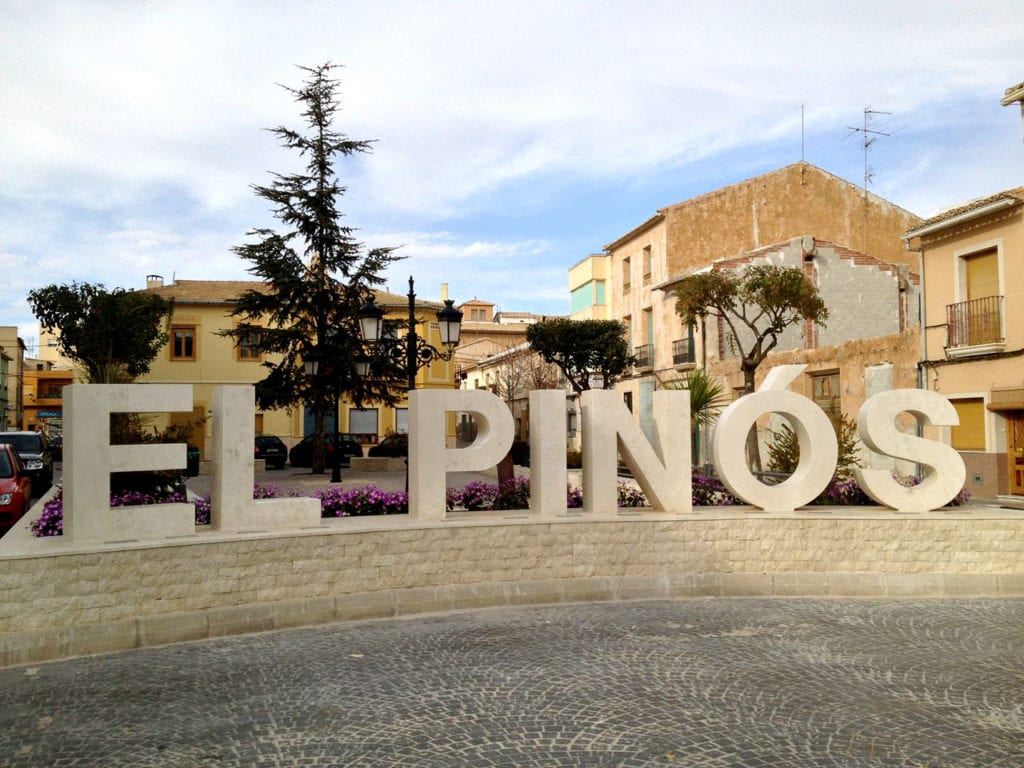


The origins of Pinoso are uncertain, as settlements in the area were successively Iberian, Roman, Muslim and others. Traces of its history can be found in archaeological sites, while more recent history can still be seen in many corners of the town.
Casas de Costa
Origins
The earliest remains date back to the Upper Palaeolithic, and during the Bronze Age some stable settlements emerged, remains of which have been found in various areas of the municipal district.
During the Roman period, the invaders showed a preference for this land, where agriculture provided an abundance of food, such as wine and olive oil, with four villas identified in the area.
By contrast, there are few remains from the Muslim period, when Pinoso consisted of a group of scattered farmsteads.
Following the Treaty of Almizra (1244), the area became part of the Crown of Castile (within the Lordship of Villena), until in 1296 James II annexed the region to the Crown of Aragon.
Chroniclers of the time record that this frontier area was frequently visited by the Castilian and Aragonese nobility, as it was then an ideal hunting ground with high game value, being largely uninhabited until agricultural and human colonisation efforts began in the 18th century. At that time it was known as “Casas de Costa” and appeared on numerous maps of the period.
In 1773 it began to be known as Pinoso, at a time when its population increased significantly. Indeed, due to a lack of capacity, the church was built in 1739 on the site of an old hermitage, and was dedicated to Saint Peter the Apostle.
Until its separation in the 19th century, Pinoso formed part of the domains of the Duchy of Híjar and, under the protection of the town of Monóvar, to which it was administratively subordinate as a hamlet.
19th Century
The Emancipation of Pinoso
The distance between Pinoso and Monóvar caused numerous problems between the two communities, particularly when carrying out important administrative procedures. As a result, a growing need emerged among the population to have their own town council and municipal district.
Thus, in 1812, taking advantage of the newly proclaimed Constitution of Cádiz (which abolished the manorial system and allowed the creation of new municipalities), Pinoso began its process of separation, which was later revoked upon the return to the throne of Ferdinand VII and the repeal of the constitutional text. Nevertheless, on 24 November 1812, the first municipal governing body was established.
It would not be until 1820, during the Liberal Triennium, when the Constitution was once again in force, that the procedures to achieve emancipation were resumed, as dissatisfaction among the people of Pinoso with Monóvar continued to grow.
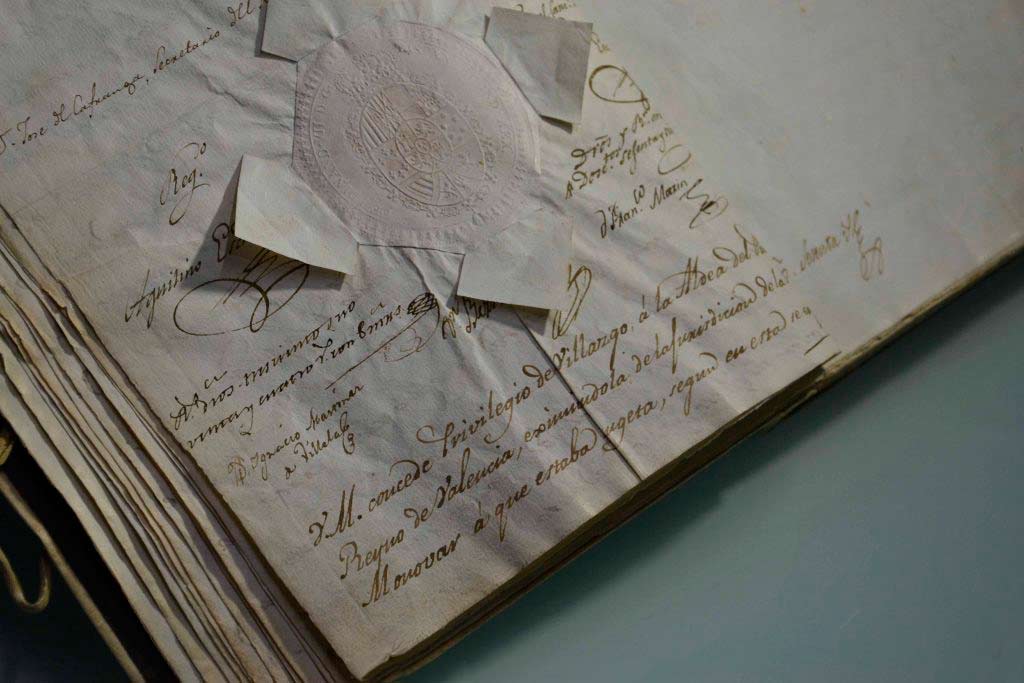
Finally, at the beginning of 1826, the King granted the long-awaited independence, conferring upon Pinoso the privilege of villazgo, with an extensive municipal district that at that time included the hamlets of Algueña and La Solana. At last, the people of Pinoso achieved their emancipation, although at a high price, as the royal treasury was then in great need of funds, since the colonies had begun to declare their independence.
This separation would be fully completed in the mid-19th century, when the Parish of Pinoso ceased to depend on that of Monóvar. From this period date the proclamation of the Blessed Virgin of the Remedy as the town’s patron saint (in 1851), as well as the emergence of its first confraternities and brotherhoods (from 1856 onwards).
Economically, Pinoso was a prosperous and predominantly agricultural town. In the last quarter of the 19th century, as a result of the phylloxera plague in France, vine cultivation expanded, contributing to the growth of a commercial network linked to the wine sector, which attracted settlers and labourers, and led to a population increase to nearly 8,000 inhabitants.
21st Century
The Construction of the Clock Tower
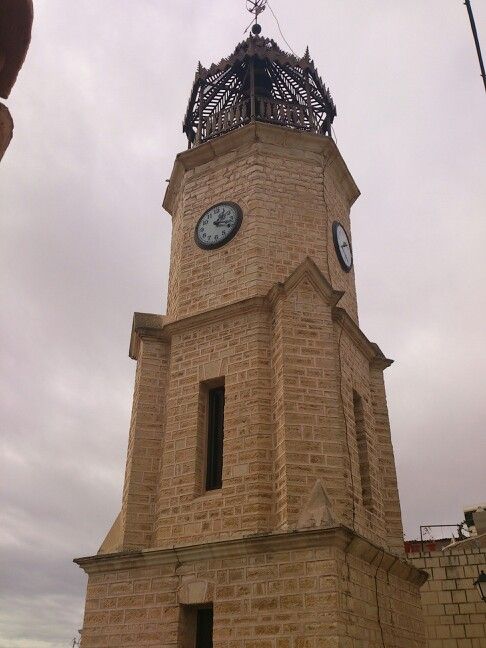
The 20th century began with the inauguration of the Clock Tower in 1900, an emblematic building for the people of Pinoso, which has only ceased to mark time when it has undergone restoration works, housing the clock acquired some years earlier in Madrid.
A few years later, in 1906, Pinoso’s festivities took on greater significance with the celebration of the first Fair. In addition, the emerging bourgeois class in Pinoso sought greater social visibility and ways to occupy its leisure time, and in response to this need recreational societies were founded, such as “La Peña”, which still exists today, although it was not the only one. The Sociedad “Unión Lírica Pinosense” was also created in 1929, resulting from the merger of the two music bands that existed in the town.
In those years, the inauguration of the Agricultural Union, with its various sections, was also of vital importance for the town’s development.
In 1933, the separation of Algueña took place. This, together with the viticultural crisis of the 1920s and emigration to towns such as Alicante, Elche, Elda and Petrer, led to a significant decline in population, with growth stagnating until the last quarter of the century. It then recovered thanks to a new economic context experienced by the municipality, driven by the exploitation of the limestone marble quarries of Monte Coto, which have generated significant revenue for the municipal coffers and have enabled Pinoso to develop services typical of much larger towns.
21st Century
The future
Today, although many people in Pinoso still depend on rain-fed agriculture, particularly vineyards, olive groves and almond orchards, many others base their economy on the footwear and furniture industries, as well as on intensive mining activity based on the extraction of limestone marble and rock salt.
The early years of the 21st century have been marked by the arrival of new residents of different nationalities, who have settled in the town centre and outlying districts.