

EL PAREDÓN DISTRICT
District Mayor Vanesa Bonmatí García
Located on the road to Yecla, 5.2 km from Pinoso, El Paredón is the district that marks the end of the Alicante provincial territory before entering the Region of Murcia.
Situated at the foot of the Sierra de Salinas in the northern part of the municipality at an altitude of 480m, the surrounding area is notable for numerous rural structures. These structures are signs of ancient communication routes, evidenced by stretches of Roman roads and “cucos” (traditional stone shelters) located along the Vereda Real de Serranos.
Archaeologically speaking, El Paredón is very rich in findings Near the main cluster, there are signs of occupation by Iberians and Romans for living and travel, as seen in the areas of La Muela and Los Cabecicos. In the latter, there is a stretch of Roman communication route that was used as a livestock path in more modern times. Another significant finding is a property boundary marker with epigraphic inscriptions, discovered near La Muela.
Like the other districts, it suffered a significant population decline in the 1960s and 1970s, leading to the closure of the well-known Casino de Taranina, a venue used for card games and Sunday afternoon dances. By the time this happened, the distillery tower had long ceased operation, and some old houses were beginning to fall into ruin.
In 1970, 116 inhabitants lived in El Paredón, residing either in the main nucleus that gives the district its name, around its old hermitage, or in the hamlets of Casa de Amorós, Casa de D. Simeón, Casilla del ‘Ingeniero, Casa de Soler, Casa de Ramos, Casa de Tomás Agustí…
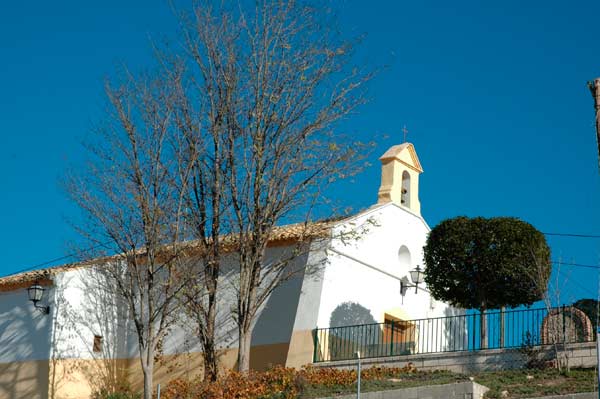
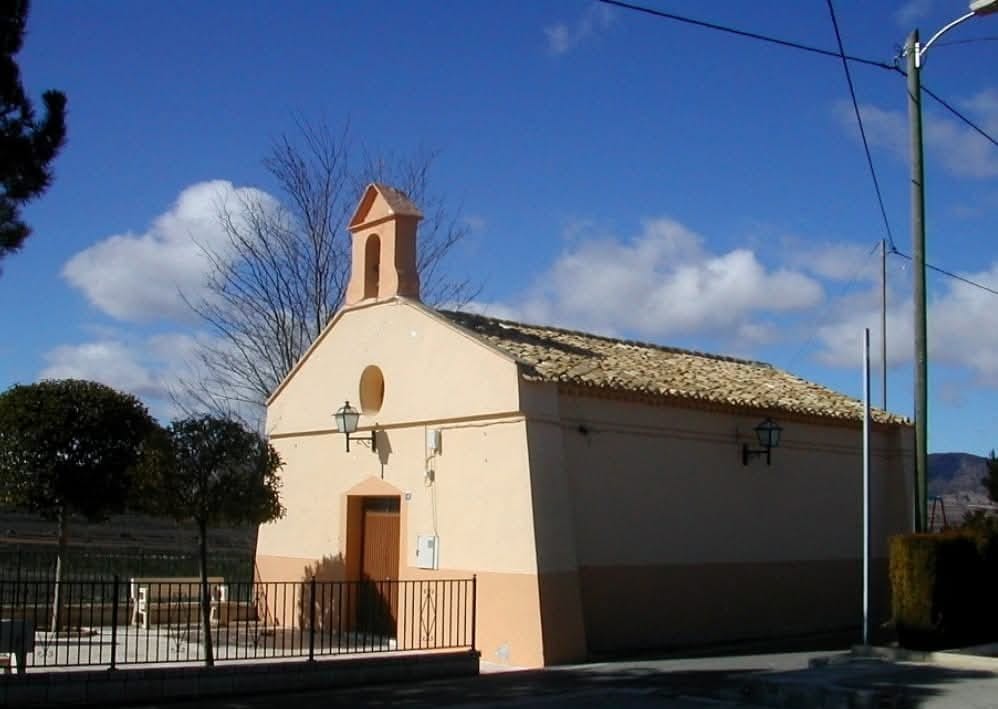
In the early 1990s, the old hermitage available to the residents of El Paredón was restored, and in 1995 its surroundings were renovated, with a small garden inaugurated behind it. Later, public lighting arrived and the roads connecting the hamlets that make up the district were paved.
After the flurry of summer festivities in Pinoso, it is the turn of this district to close the cycle in the last fortnight of August, with festivities held in honor of the Virgin of Sorrows (Virgen de los Dolores). Due to its irregular layout, it is very curious to observe the procession route, given that the hamlets that make up the main group are sufficiently separated, walking at times between terraces, although that route is now made more comfortably after the repair of the roads.